

RIGIPS - the gypsum board
Drywall board in dry construction: information, practice, and history
As the name suggests, a drywall board consists of gypsum encased in cardboard. Today, Rigips boards are much more than just building materials; they are a generic term for gypsum boards. Over the decades of its company history, the pioneering RIGIPS brand has itself become a trademark and now represents modern drywall construction.
Introduction
With the founding of the company on November 1, 1945, around 80 years ago, RIGIPS introduced and popularised drywall construction with gypsum boards – the Rigips boards – in Germany. Since then, gypsum boards and gypsum fibreboards from RIGIPS have become synonymous with this type of interior construction.
As a DIY enthusiast, professional craftsman, architect or planner, today you can choose from an extremely wide range of products. There are many different designs and formats available for a variety of applications, including floors, walls, ceilings, roofs and wet rooms. Just as your needs for safety, living comfort and aesthetics are diverse, so too is the range of uses for our modern drywall systems.
History: this is how gypsum boards were created.
Gypsum board was patented in the USA as early as 1894. Industrial production began there in 1910.
The first gypsum board factory on European soil was established in Riga in 1938. Following the war, a new factory was constructed in Bodenwerder, Lower Saxony, and from there, gypsum-based boards and construction systems began their triumphant advance across Europe.
In 1961, the company owners officially trademarked the name "Rigips", combining the location of the first production site, Riga, with the natural raw material, gypsum. And so our company name was born.
Rigips board – one name, many variants
Today, however, there is no longer just THE one Rigips board. With the emergence of modern requirements for buildings and construction projects, different boards have been developed for various applications. The wide range of our Rigips boards is now perfectly tailored to the diverse challenges of interior construction. Whether moisture-resistant boards for wet rooms, special formats and designs, or, of course, the classic Rigips board: as a builder, architect, or planner, you will find suitable boards for all requirements today. In addition, we offer high-performance accessories and matching components – all from a single source.
Another significant factor influencing the final result is joint or full-surface filling. Our Rigips joint fillers are tailored to the specific type of Rigips board and enable secure filling with or without reinforcement strips. The Rigips boards treated in this way then form the perfect base for all further surface treatments, such as a creative paint job.
Rigips stands for a healthy, natural building material: walls built with our gypsum boards offer high living comfort, as well as powerful sound and fire protection.
Installation and advantages: what is possible with drywall?
Gypsum boards and gypsum fibreboards are indispensable in modern interior construction. Floor plans and room layouts can be easily and quickly modified with plasterboards, even by semi-professionals, to adapt to new phases of life. For example, a new children's room can be created in no time, or space can be made for a home office.
Drywall construction methods are ideal for bringing creative expansion and furnishing ideas to life. As well as offering numerous advantages in terms of ease of processing and cost-effectiveness, this method of construction also excels in another area. Plasterboards allow you to build sustainably and create living and working spaces that add value.
There are suitable plasterboards for every requirement, whether it's for building walls, ceilings or floors, or for creatively expanding attics.
Plasterboards: the major advantages
The advantages of this construction method are obvious. Gypsum boards are lightweight. This not only impacts the workflows on the construction site itself but, of course, also the structural integrity of rooms and buildings. Additionally, they are easy and quick to process, cost-effective, and available at any building materials store.
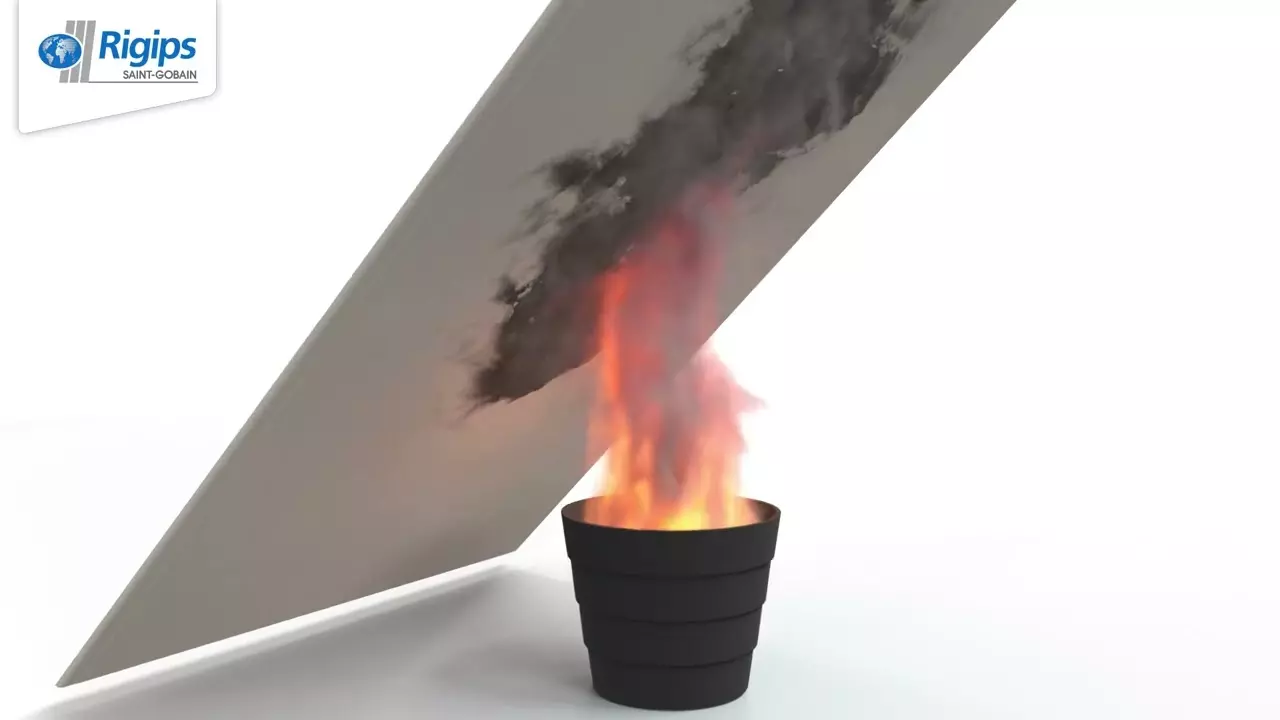
Thanks to the crystal water contained in the gypsum core, the boards also provide a certain level of fire protection even in their standard version. In the event of a fire, the stored water turns into steam, which forms a protective layer over the board.
Pro indoor climate, pro well-being: gypsum is the first choice for interior construction
Gypsum is a natural raw material that, especially from ecological and building biology perspectives, significantly contributes to well-being and a good indoor climate. Gypsum has the positive property of absorbing moisture from the indoor air and releasing it again when temperatures rise. This naturally regulates the indoor climate. Additionally, plasterboards only transfer room heat to the outside to a very limited extent, keeping their surfaces, and consequently the rooms, comfortably warm.
Construction of a wall: practical tips in 7 steps
You don't need to be an expert to achieve a professional interior finish: even dedicated DIY enthusiasts can build a wall with drywall boards. Follow these 7 steps:
- Measure the course of your walls and ceiling. This way, you’ll know how long and high your future walls need to be.
- Calculate the materials you will need. Our online calculation tools can help you with this. You can find these special programs in the Planning and Calculating section.
- After procuring the materials, mark the course of the future wall and create a substructure. Ideally, you should use our drywall profiles for this. They provide the perfect substructure for your new wall.
- Once the substructure has been successfully created, you can attach the drywall boards with screws. There is a wide range of screws and boards available, so you will find the right system for every application.
- Once all the boards have been installed, the joints, connections and screw heads on the raw wall need to be filled and smoothed. The wall should ultimately be flat and clean.
- Next, prime the surfaces to prepare them for the final design.
- Finally, you can customise the surface. Whether you choose to plaster, paint or wallpaper, all of these options are easily achievable with drywall boards.
Screws, anchors and hanging loads on drywall boards
There are also some important points to consider when attaching hanging loads to drywall walls. To mount items in the “light and flat” category, such as pictures or pinboards, on a drywall wall, regular picture hooks or nails are completely sufficient. As a general rule, a nail can support up to 5 kilograms with double-layered plasterboard. No more than three nails should be used per item.
For heavier hanging loads, up to about 30 kilograms, we recommend classic plastic cavity anchors. These expand on the back of the drywall board when screwed in, acting like an anchor. This allows you to securely mount large-format pictures or even a flat-screen TV to the wall. If metal cavity anchors are used, the permissible loads increase to 40 or 50 kilograms. Heavy and deep items, such as kitchen cabinets or shelves, should only be mounted on drywall walls using metal cavity anchors.
The Rigidur gypsum fibreboards and the drywall board Rigips Habito (more on this below) also allow for load mounting without anchors.
The drywall board Rigips Habito: durable, robust and resilient
If it is foreseeable that your wall will be exposed to specific stresses (both in terms of robustness and the loads to be attached), it is advisable to use gypsum boards specifically designed for this purpose, such as Rigips Habito, right from the start. This solid drywall board is cost-effective and versatile, and it can be easily installed. What's more, it is highly durable and robust, and can bear heavy loads without the need for wall plugs!
With Rigips Habito, even heavy loads can be easily attached exactly where you need them. Shelves, flat-screen TVs or cabinets can be mounted on a stud wall clad with Rigips Habito without wall plugs and can be effortlessly secured using just a screwdriver and standard screws. There is no need for drill holes, drilling dust or drilling noise, and drills, wall plugs, drilling machines and vacuum cleaners are no longer required. With a load capacity of up to 30 kilograms per screw for single-layer cladding or 60 kilograms for double-layer cladding, Rigips Habito can, for example, easily support a filled hanging cabinet – all without special fasteners or additional constructions such as a crossbeam.
Of course, when it comes to the loads attached to a wall, the shape and nature of the load always play a role. For example, a flat-screen TV, which is generally mounted securely and close to the wall with a bracket, may actually protrude up to 1 meter with a flexible swing mechanism. To provide you with guidance even in such cases, we have included example values in our brochure: Load Attachment (pages 30-31).
Solutions: get accurate information for individual solutions
Walls and ceilings with plasterboard
Two important application areas for our plasterboard: walls and ceilings in drywall construction. Find out why this construction method is so versatile, space-efficient and durable, as well as being aesthetically pleasing.
More about ceiling constructions... All about walls with RIGIPS