

Rigips BIM
Intelligent and efficient planning
BIM – planning at the highest level with RIGIPS
What is BIM (definition)?
According to Wikipedia: the term Building Information Modeling (short: BIM; German: Bauwerksdatenmodellierung) describes a method of networked planning, execution, and management of buildings and other structures using software.
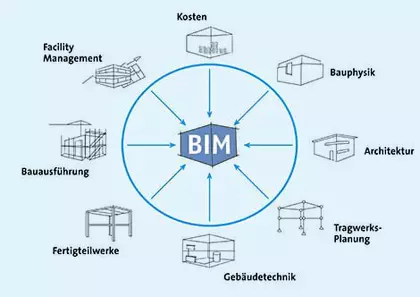
BIM is a digital, holistic method for planning, building, managing, and operating construction projects and objects.
Why BIM (planning)?
The fundamental principle of BIM planning is to view projects as a whole and store the necessary information in a digital building model, making it accessible to all parties involved in the construction. Project success is achieved through integrated collaboration based on this digital building model.
This approach to digital planning methodology influences workflows, processes and technologies, as well as employee expertise, and optimises information exchange within the project. The digital building model in the BIM tool (usually on a shared project platform in the cloud) serves as the central and transparent information base for the project team throughout the entire building lifecycle.
Greater transparency, efficiency, and cost certainty are among the primary advantages of BIM, benefiting all parties involved in construction through BIM-based planning.
What does the BIM method mean for you?
1. Intensive exchange and coordination with planning participants
2. Shorter project durations during construction
3. Cost and planning certainty
4. Avoidance of planning errors and reduction of (legal) risks
5. Solid decision-making basis
6. Reduced overall costs, including minimization of follow-up costs (as errors/defects are identified and corrected during the planning phase)
7. Higher quality planning, thereby improving your future competitiveness through the use and continuous optimization of your standardized processes (CIP)
Saint-Gobain goes BIM
Making digital planning, building, and operating more comfortable, reliable, and efficient is a goal of Saint-Gobain. For this reason, Saint-Gobain is already developing powerful, cross-brand BIM solutions. Architects and planners thus gain comprehensive access to the combined construction expertise of the Saint-Gobain Group, which includes RIGIPS as well as the brands ISOVER, Weber, Ecophon, and Building Glass Europe. BIM-compliant solutions from Saint-Gobain are already available for many building components and can be easily applied in graphical models during the early planning stages. This ensures that many required product and construction data are already digitally available for quantity and cost evaluations as well as for the creation of specifications.