

Processing of Rigidur gypsum fiberboards on walls, ceilings, and roofs
Butt joint installation and joint techniques - filler joint / adhesive joint
Rigidur gypsum fiberboards - advantages at a glance
• Hard board protects walls from damage during installation and use
• Smooth surface eliminates the need for full-surface plastering of walls
• Single-layer, load-bearing constructions possible within the system, load attachment without dowels
All about Rigidur gypsum fiberboards...
Joint techniques
Rigidur gypsum fiberboards offer you different joint techniques depending on application and processing: AK joint technique, adhesive joint technique, and plaster joint technique. For special requirements regarding crack resistance in the joint area, the Rigidur mesh tape is recommended. Detailed information about joint plastering can be found in the IGG Bulletin No. 2.1 "Plastering of Gypsum Fiberboards - Surface Qualities (Q1 - Q4)".
Joint filling
• The facade must be closed, the wet screed applied, and wet plaster executed, as persistent moisture can hinder the drying of the plaster joint and cause joint swelling.
• Rigidur gypsum fiberboards that have become damp should only be plastered after complete drying.
• Cast asphalt screed must be applied before plastering, as otherwise heat effects can cause cracks in the joint area.
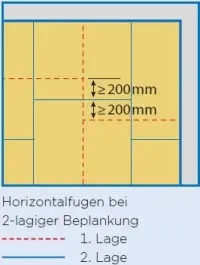
Formation of horizontal joints
• If boarding with whole boards is not possible, necessary horizontal joints should be arranged in the upper wall area.
• For single-layer boarding of facing shells, horizontal joints must be arranged at least 400 mm apart.
• For multiple boarding layers, the joints must be staggered (200 mm).
• Plastering of 5 - 7 mm joints (plaster joint technique) with VARIO joint filler. Alternatively: butt joint installation using adhesive joint technique (see topic adhesive joint technique) - For the formation of horizontal joints with boards with beveled edges (AK), both plaster joint technique and adhesive joint technique can be used.
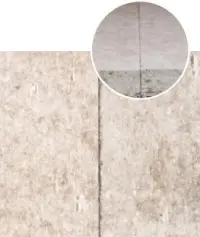
Butt installation
Butt installation is applicable to Rigidur gypsum fibreboards with factory-cut, circular saw-cut or guide rail-cut edges. If it is covered by another boarding layer, adhesion or plastering of the first board layer is not necessary.
Processing Note: For double-layer boarding, the Rigidur gypsum fiberboards are installed with staggered joints. One of the joint techniques described below is used for the second layer.
Filled joint without reinforcement tape
Install the boards with a joint width of 5–7 mm. Before filling, remove dust from the joints and pre‑dampen the joint areas.
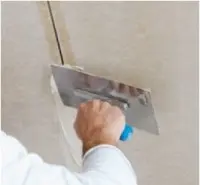
Pre-filling: Apply VARIO joint filler using a filling knife or trowel.
Insert VARIO joint filler across the joint and level it flush with the board surface. Fill any holes or imperfections with joint filler and cover screw heads.
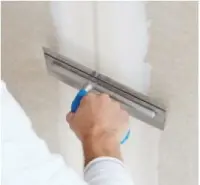
Post-filling: Further work may only be carried out once the pre-fill has fully set.
Apply the finish coat using the same joint filler as for pre-filling, or alternatively use Rigips ready-mixed filler (ProMix Finish).
Filled joint with fibreglass or paper reinforcement tape
For Rigidur H boards with tapered edges, filled joints with reinforcing tape may be executed using either:
• Rigips fibreglass reinforcement tape or
• Rigips paper reinforcement tape.
• Fill the longitudinal and transverse joints with VARIO joint filler, applying the material across the joint and finishing flush with the board surface.
• Insert reinforcement tape into the plaster bed and then smooth over without applying additional material.
• Post-filling is also carried out with VARIO joint filler, alternatively with ProMix Finish. This step may only be carried out once the pre-fill has fully dried.
Processing Note: Rigidur mesh tape
In areas where increased tensions are expected (e.g., in timber construction or in combination with mineral surface coatings and thin plasters according to manufacturer recommendations), we recommend using Rigidur mesh tape.
Adhesive joint technique
• Only perfectly straight board edges, i.e., factory-cut edges or edges cut with a guided plunge saw, are suitable for processing with the adhesive joint technique. For flawless joint adhesion, only Rigidur joint adhesive should be used.
• Clean the board edges of gypsum or construction dust. Apply the joint adhesive generously to the clean, dust-free edge of the first mounted board, never to the substructure.
• Press the next board against the first with a maximum joint gap of 1 mm. When pressing together, the joint adhesive must fill the entire joint.
• Excess joint adhesive will ooze out of the joint and can be removed with a spatula after hardening.
• The consumption of joint adhesive is approximately 14 ml per meter of joint.
• For a visually perfect result, screw heads and damaged areas are plastered, and the adhesive joint is smoothed with VARIO joint filler or ProMix Finish ready-mixed filler after complete hardening.
Our brochure contains detailed applications & work steps...
Rigips Processing Guidelines for Walls, Ceilings, Roofs with Rigidur Gypsum Fiberboards