
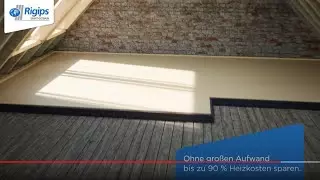
Efficient insulation for uninhabited attics - no more unnecessary energy loss in the living space below!
Rigidur® Attic Element 032 TF with Innovative Stair Rabbet
Climate change in the attic
Buildings account for approximately 40% of total energy consumption and around one-third of CO₂ emissions.
Efficient thermal insulation in existing buildings can significantly contribute to energy savings and increase property value. It can also enhance living and residential comfort, while conserving resources and protecting the environment.
Why is it worth investing in insulation?
Efficient attic insulation using Rigidur attic elements in accordance with GEG is worthwhile:
• No unnecessary energy is lost through the roof anymore
• Lower heating costs thanks to more efficient insulation
• Further use of the attic is possible, potentially including expansion of living space
• No restrictions on the rooms below the attic
Strong arguments for attic insulation of the top floor ceiling
Sustainable environmental protection
Insulating the top floor ceiling of an average detached single-family home can significantly reduce CO2 emissions by around 28%, making a substantial contribution to climate protection.
Significant energy and cost savings – reduce heating costs by up to 90%
Insulating the ceiling of the top floor leads to a sustainable reduction in energy consumption, thereby lowering heating costs.
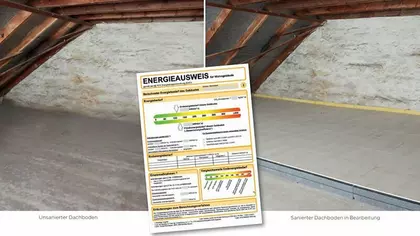
Increase in property value – poor energy efficiency lowers property prices by 21%
In times of rising energy prices, the mere perception of inadequate energy refurbishment can negatively impact a property's market value. Insulating the top-floor ceiling is an effective way to meet the requirements of the 2020 GEG (Building Energy Act) while also increasing the building's energy efficiency in a sustainable way. This is reflected in the energy certificate classification, which ensures the long-term preservation or even increase in the property's value.
Advantages of Rigidur® Attic Floor Elements 032 TF:
✓ Simple and quick self-installation
✓ Permanently comfortable indoor climate
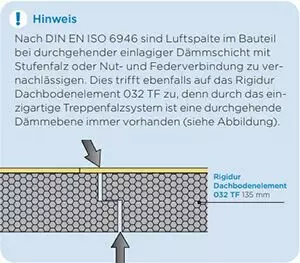
✓ Seamless installation with stair step joints (thermal bridge-free)
✓ Directly walkable and load-bearing floor surface
✓ Up to 30% time savings with loose installation
✓ Perfect attic insulation in minimal installation time
✓ Excellent insulation properties
✓ Easy compliance with GEG requirements
✓ Over 20% less insulation material used for the same performance
✓ Ready for future conversion into living space
Flexible, thermal‑bridge‑free installation – three installation options:
1. Loose installation
Loose installation is quick and easy, making it a cost-effective option. The elements are laid in a bonded, loose manner. This method is ideal for attics with low stress levels. Compared to traditional methods involving adhesive and screws, loose installation can save up to 30% of assembly time.
2. Bonded installation
Bonded installation creates a self-contained structure. The joints are reinforced and securely connected.
3. Bonded and screwed installation
The bonded and screwed method is the traditional installation technique. Once completed, this combination provides maximum stability. Either variant allows for efficient and secure insulation. Upgrading the attic to a living space at a later date can easily be achieved by installing an additional layer of Rigidur H gypsum fibreboards. This increases the floor's load-bearing capacity.
Fundamental installation and preparation, see brochure 'Rigidur DBE 032 TF' from page 6...