

Gypsum is the Rock of the Year 2022
Gypsum is the Rock of the Year 2022
Without gypsum, nothing works at RIGIPS!
The same applies to our entire society: gypsum is found in our homes and the foundations of wind turbines, and is also used in medical applications, jewellery, ceramics and food production. Its diverse applications and high demand make the future supply of gypsum, due to the elimination of FGD gypsum, a topic worth discussing. This is why gypsum was chosen as the "Rock of the Year 2022".
Since 2007, the Professional Association of German Geoscientists (Berufsverband Deutscher Geowissenschaftler e.V.) has presented the "Rock of the Year" award. Following slate (2019) and andesite (2020/21), gypsum now plays a leading role in petrology. On 6 October 2022, it was inaugurated in a ceremony in Iphofen, Lower Franconia, attended by representatives from various associations, companies and authorities, as well as several scientists.
What is gypsum?
Gypsum is a sulfate rock formed through the precipitation of minerals in
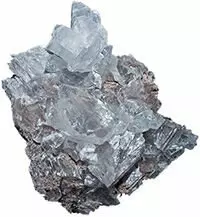
prehistoric shallow seas. The Zechstein gypsums, which dominate the South Harz region, for example, are an impressive 250 million years old. Gypsum contains two molecules of water (CaSO₄·2H₂O), but this water is absent in the very similar yet distinct mineral anhydrite (CaSO₄). Both minerals are quarried for various purposes, with gypsum being particularly important as a building material due to its superior properties compared to many other materials. It is also widely used in areas such as medicine, art and the ceramics industry, for example in the production of moulds..
Gypsum is as versatile in its uses as it is diverse in its forms. Depending on its purity and the minerals it is mixed with, its structures and colours can vary. Crystalline formations such as selenite ("Maria’s glass") also occur. People have been fascinated by its variety and universal ease of use for a long time. Gypsum has been used as a building material since the Neolithic period!
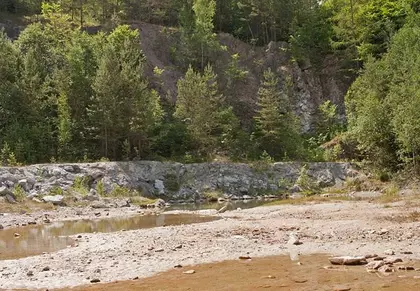
FGD Gypsum
In addition to naturally occurring gypsum, secondary gypsum is created during processes such as flue gas desulfurisation in the coal industry. Since this process became mandatory at the end of the 20th century, so-called FGD gypsum has become increasingly important for the gypsum processing industry.
The phase-out of lignite coal by 2038 will significantly reduce the availability of this resource, making it necessary to clarify the situation regarding alternatives.
Gypsum & Nature
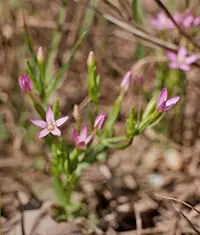
Gypsum rocks are essential not only for industry, but also in regions of the Earth where they lie on the surface, as their high water solubility becomes evident. In gypsum karst regions such as those in the South Harz area, the landscape is characterised by small-scale dynamic features such as sinkholes, dolines and disappearing streams, which create significant geotopes. This structural diversity also results in exceptionally high biodiversity by German standards.
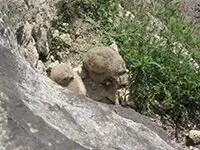
These areas have long been of particular interest for the extraction of natural gypsum. Today, nature conservation is a primary focus during gypsum mining. For instance, our quarries should become valuable habitats even after mining has ended. Even during the extraction process, the cracks and caves formed in the steep gypsum and anhydrite walls can serve as roosts for bats and eagle owls. Various plant species, some of which are rare, begin to grow on raw soil surfaces shortly after mining begins. Small bodies of water, whether permanent or temporary, also provide refuge for some highly endangered amphibians. Thus, thoughtful extraction of this remarkable rock can benefit both people and nature.
VIDEO: Sustainable gypsum extraction and biodiversity
On the occasion of the naming of gypsum as the Rock of the Year 2022, Dr Andreas von Heßberg, Chair of Disturbance Ecology and Vegetation Dynamics at the University of Bayreuth, presented the topic of biodiversity in gypsum quarries from a scientific perspective.
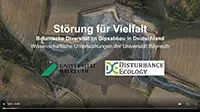
The film, which is available to download, provides an insight into the University of Bayreuth's scientific research activities.
PRESS: Ceremonial naming of the Rock of the Year 2022
The Association of German Geoscientists e.V. has named gypsum the Rock of the Year 2022. The ceremonial christening took place on 6 October in Iphofen, Bavaria, in front of over 80 guests. In collaboration with the Federal Association of the Gypsum Industry, a freshly mined gypsum rock was unveiled in a ceremony.
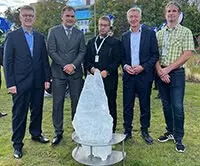
Representatives from Saint-Gobain Rigips GmbH and Saint-Gobain Formula GmbH were also present...